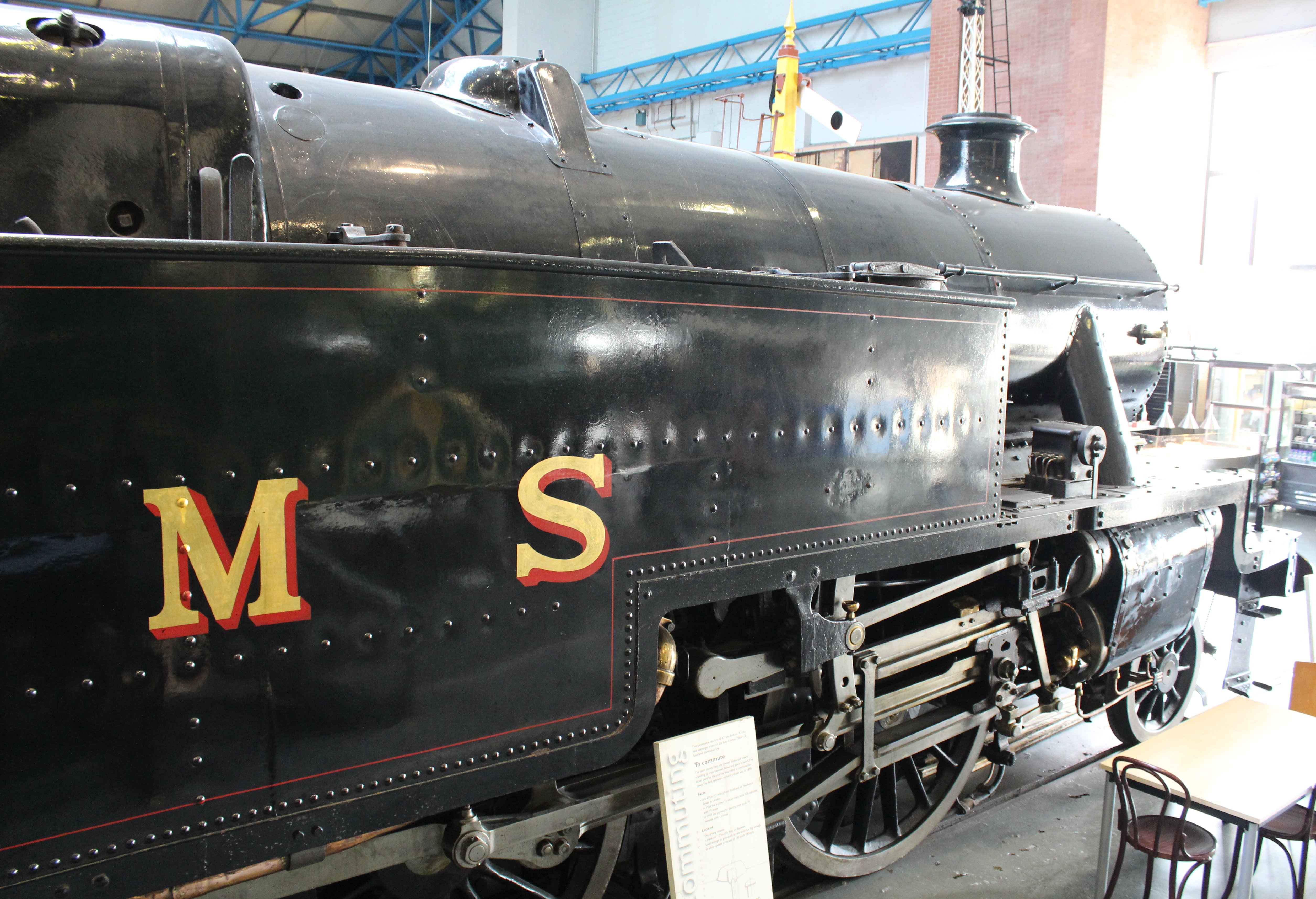
 Ok, so supercharged isn’t technically the correct expression, but the National Railway Museum’s LMS tank 2500 is a fast, powerful machine, especially considering it is a tank engine. Built at Derby in 1934, this Stanier 2-6-4T was the first of thirty seven locomotives built specifically for the London, Tilbury and Southend Railway.
 This railway had many stops along it’s route and required a locomotive with a high rate of acceleration to keep up to the schedule. For that reason, this locomotive class had three cylinders. However, this rate of acceleration was not required for all lines and Stanier adopted a more conventional and easier/cheaper to maintain two cylinder design from 1935, creating a more general-purpose type that numbered 206 locomotives. The 2-6-4T wheel arrangement allows the class to have a large bunker for added endurance and being a tank engine it could work well running bunker-first. The two cylinder locomotive class would evolve through time and updated by future Chief Mechanical Engineer’s Fairburn and then by Riddles into the BR Standard 4MT class.
 After withdrawal in 1961, LMS 2500 was saved for the National Collection and is the sole survivor of it’s class. Sadly, the numerically more common two-cylinder design was not as fortunate and none of these survived. 2500 is a magnificent steam locomotive and is well worth checking out if you visit the National Railway Museum in York.
To read about other exhibits to be found in the National Railway Museum during this visit in 2013, please click here.


 Loco Yard