
In the search for a working Hornby type 7 motor, this J83 spent a brief foray on the locoyard layout before being dismantled, quite frankly in disgust! This model is very poor and it is quite surprising that Hornby sell it in this century. You’ll soon find out why I say this…
Class: LNER J83 (NBR class D)
Use: Goods/Shunting
Region: North Eastern
Era: 1901 – 1962
Preserved examples:
None

Manufacturer: Hornby
Power: Welterweight
Motor: Type 7 motor
DCC options: None or DCC fitted – click here for DCC fitting guide for DC versions.
Locoyard Review
Detailing:
1/5
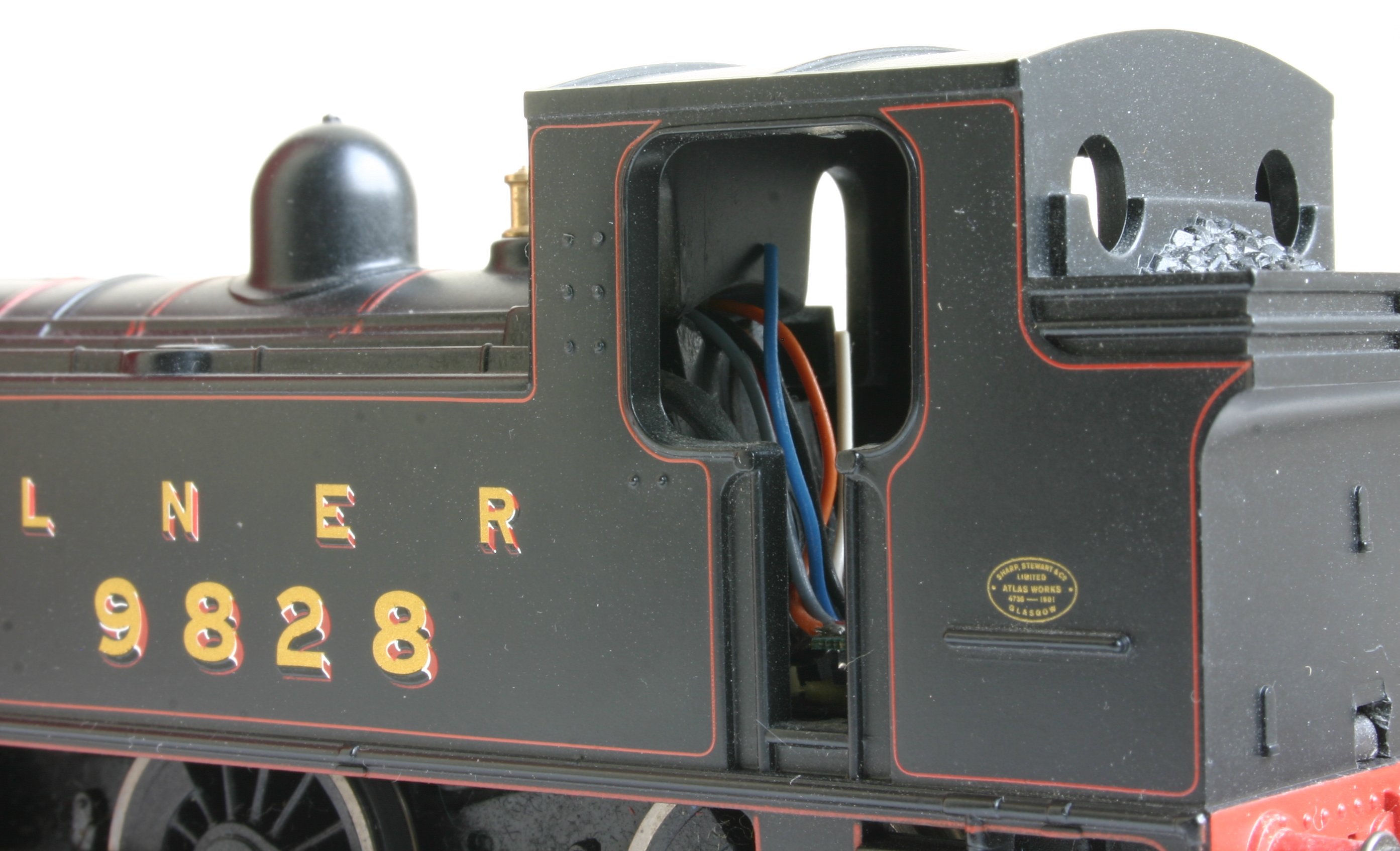
Terrible detailing! 1970’s vintage with no modern concessions… moulded handrails, no cab backhead or floor, moulded pipes, no cab windows.
Outline/Looks: 2/5
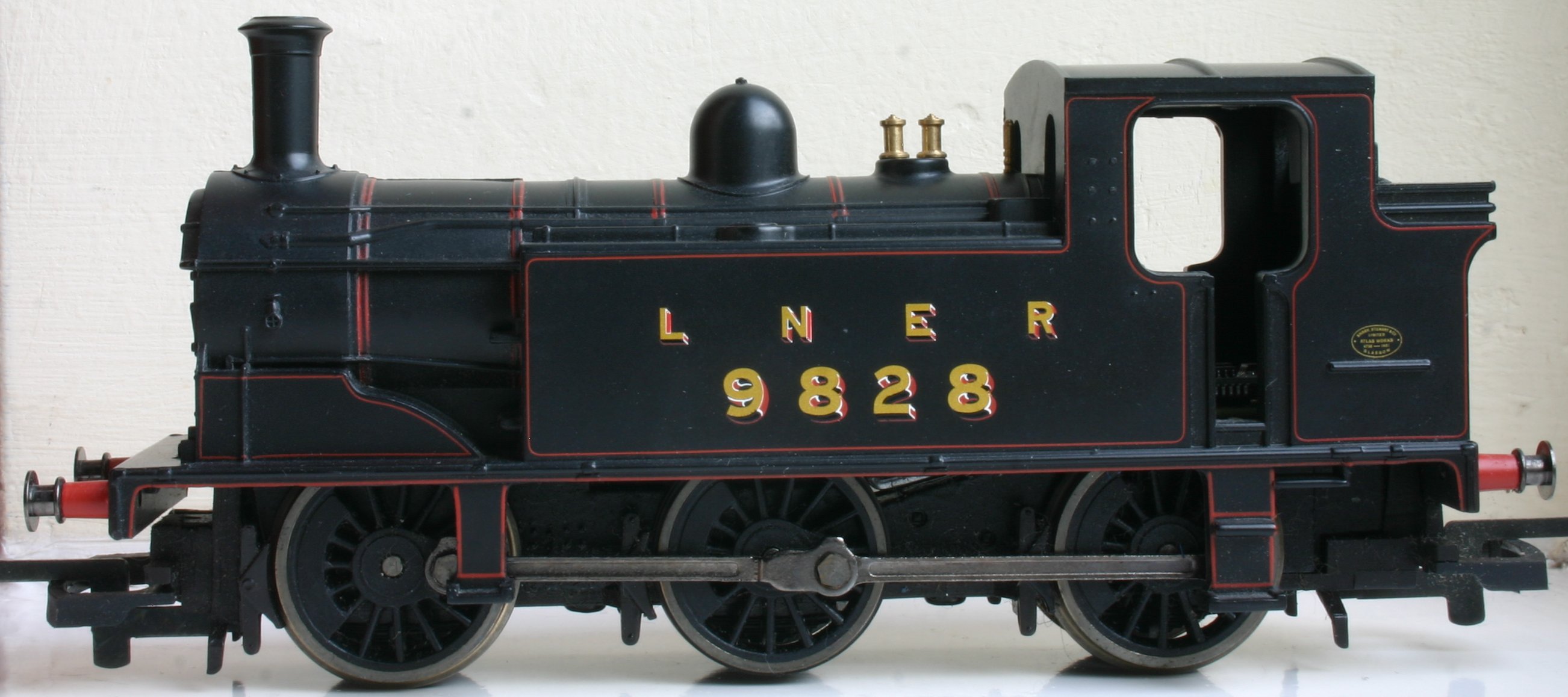
This is a generous score considering the detailing (see above!) No daylight under the boiler, body is stretched vertically, the high cab being particularly noticeable. It is an approximation of the prototype, but nothing more.
Finish/Decoration:
4/5
This is the best bit! Decoration, lining and transfers are excellent and are probably the only thing that make this model remotely marketable. The moulding split line across the boiler and chimney is very noticeable, but there’s only so much that you can do with a bad canvas!

Running Qualities:
3.5/5
The type 7 motor has been around for ages, as has the chassis, which is also used for the 2721 class pannier tank, J13/J52, Jinty, Thomas the Tank Engine/E2 and Railroad class 08 diesel shunter. My experiences of this chassis in the past have been mixed, but it has to be said that Hornby have done a good job in improving it over the years. It isn’t the most smooth or quiet chassis, nor is it the most rough or noisy. Pick-ups are good too – so not bad all round for a cheap chassis.
Relative Power:
3/5
As with the Hornby Jinty, this model’s power doesn’t quite live up to the prototype’s. It just about copes with four bogey carriages on tight 2nd radius corners – which is probably more than enough power for most of us. Non-DCC versions have space in the smokebox area where a weight can be added, which helps a lot.

Specification:
1.5/5
Massive tension lock coupling ‘s set the low-spec tone. Unlike Bachmann 0-6-0 Junior Models; basic versions are not DCC ready, although DCC fitted versions are around. If you are happy to use a soldering iron, DCC Conversion is not too tough (click here for guide). Unlike the Hornby Jinty it does not have a cab, glazed windows or handrails.
Value:
2/5
Remarkably expensive, retailers sell boxed DCC fitted versions for £44. Generally costs a little more than the better Hornby Jinty. If you must have one, spend no more than £25 for a new one.

Overall Locoyardometer Score: 2.4
Avoid this model if you can. If you want a cheap model, opt for the Hornby Jinty or J13/J52 or 2721 open pannier tank. The only thing this model has going for it; is that it is a toy with very little that can be broken. This is not much of a compliment, but it’s the best it will get from me. This is a rubbish model!

Detailometer 1, Outlineometer 2.0, Finishometer 4, Motorometer 3.5, Powerometer 3, Specometer 1.5, Valueometer 2, Locoyardometer 2.4
Do not forget to check out the many over model steam locomotive reviews that can be found here.


 Loco Yard